Is your NCCD Evidence Strong Enough for Review
Our second Online NCCD Symposium of the year brought together critical insights into effective evidence gathering as schools prepare for submissions this August. Here are the key takeaways.
Triage: Where Are You Now?
For many schools, NCCD evidence is spread across multiple systems, making it difficult to form a clear, consistent picture. The first step is a rapid, honest assessment of your current position. By reviewing evidence across key categories, schools can identify gaps, inconsistencies between staff or faculties and areas where documentation is difficult to access or verify.
This stage isn’t about fixing everything; it’s about gaining clarity on what matters most.
A useful question at this stage is: “Would someone outside our school understand this?”
When You're Not Evidence Ready
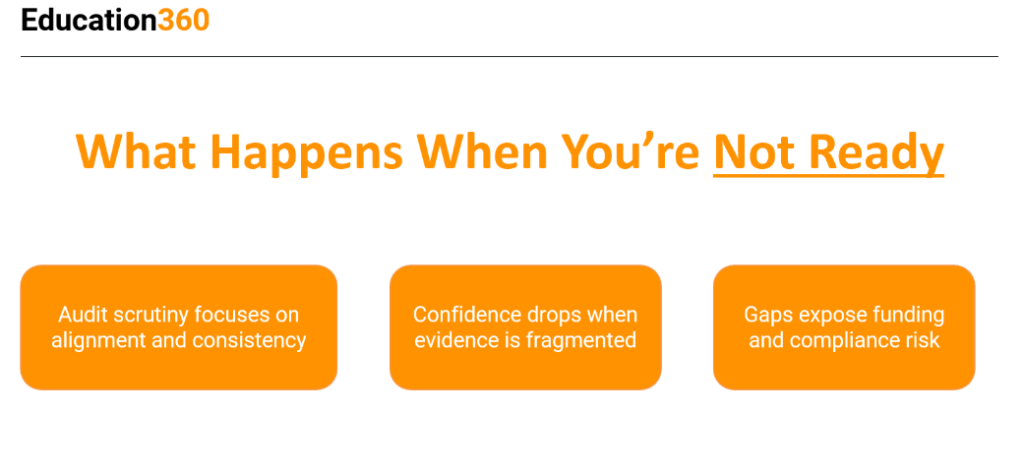
Auditors are not looking for perfection, they are looking for consistency and alignment. When documentation is fragmented or varies across teachers or faculties, it becomes difficult to present a clear, defensible picture of student support.
This challenge is often compounded by regular movement of students throughout the year, which can quickly make records outdated, repeated or inconsistent. Without a coordinated approach, schools may find themselves under pressure during submission periods, spending valuable time reconciling information instead of confidently validating it.
When data are fragmented, teachers must rely on individual knowledge, increasing the risk of gaps and weakening the link between adjustments and evidence. Strong practice, by contrast, is built on consistently maintained documentation and regular review of adjustments. Effective documentation should present a clear, traceable narrative that aligns student needs, consultation and classroom practice.
From Disarray to Defensible
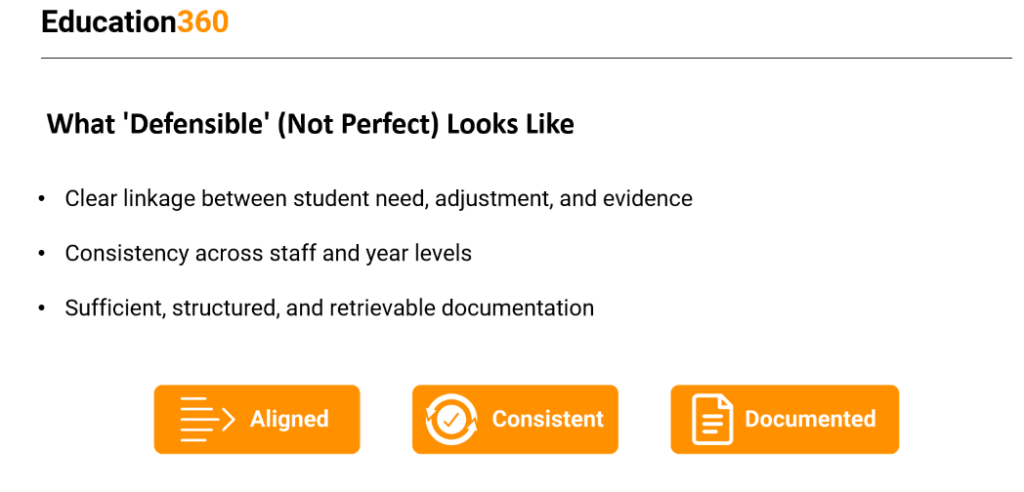
Defensibility is not about perfection or completeness. It is about how you can clearly and confidently explain the decisions made and the evidence supporting them. When this defensible position is achieved, auditors and external organisations can readily see the connection between identified student needs, adjustments and the rationale behind the evidence.
The goal is confidence at any stage of the NCCD timeline.
Why Schools Choose NCCD360
NCCD360 brings clarity and confidence to NCCD processes by providing a single source of truth and a coherent, system-wide view of student documentation. With the Student Transfer feature, schools can export comprehensive records backed by checksum verification, ensuring data integrity and flagging inconsistencies before import. Safeguards, including reversible Match & Confirm decisions, inclusion of only approved applications, and automatic merging of duplicate student IDs, ensure accuracy, transparency and control.
More than a compliance tool, NCCD360 enables schools to move from reactive practices to repeatable, sustainable processes. It reduces reliance on individual staff knowledge while supporting consistent workflows and alignment across organisations. As part of the Education360 ecosystem, it demonstrates why Education360 remains the Top 1 data platform for schools, saving time, reducing administrative burden and turning data into successful NCCD applications.