Skip to content

Data in School Melbourne 2026: Beyond Student Data

Unlocking a Whole of School Intelligence | Education360
Event Recap · Data in Schools Melbourne

Unlocking a Whole of School Intelligence

Our CEO and Founder Matthew Willie presented at Data in Schools Melbourne, sharing how schools can move beyond student data to gain a true 360-degree view of their entire organisation. Here is a full recap of the session.

Education360 Team · 22 June 2026 · 7 min read

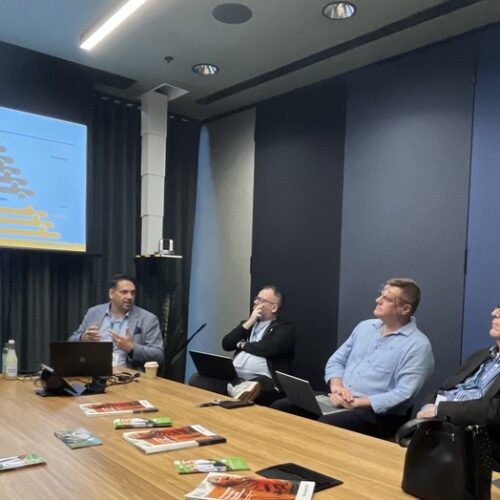
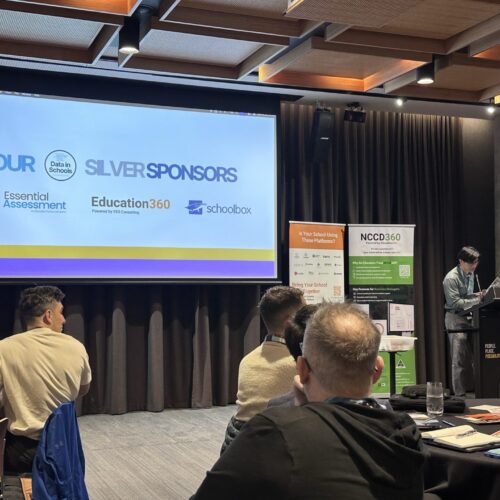
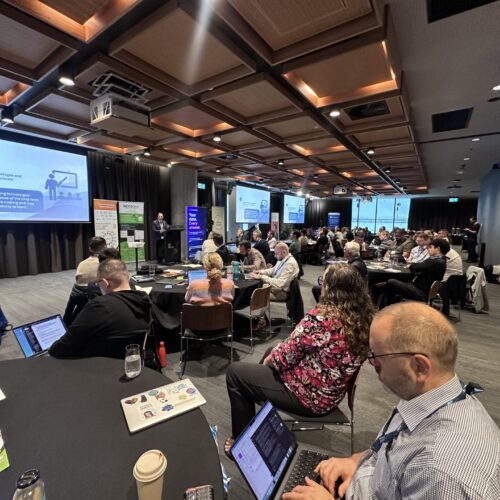
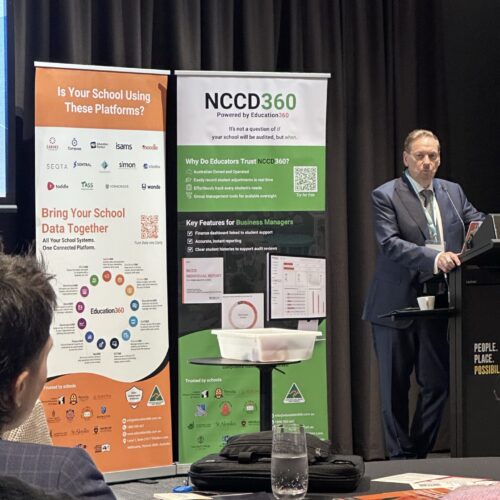
Over Thursday 19 and Friday 20 June, Data in Schools Melbourne 2026 brought together some of Australia’s most forward-thinking school data leaders at Melbourne Connect in Carlton. Principals, directors of data analytics, heads of learning analytics, deputy principals, curriculum leaders and data coordinators from schools across Australia and internationally gathered for two days of roundtable discussions, peer learning and expert presentations. Education360 was proud to attend as a Silver Sponsor and on Day 2, our CEO and Founder Matthew Willie took to the stage to present Beyond Student Data: Unlocking a Whole of School Intelligence, a session that explored what truly data-driven schools look like and the practical steps to get there.

Education360 at Data in Schools Melbourne

Across both days, the roundtable format made this event genuinely special. Rather than passive conference-style sessions, school leaders including directors of data analytics, heads of learning analytics, deputy principals and data coordinators from organisations like Melbourne Archdiocese Catholic Schools, Caulfield Grammar School, Barker College, Knox Grammar School and many more gathered in small groups to tackle real challenges together. The conversation flowed between schools of all sizes, sectors and states.

The conversations were honest. It was clear that schools are still grappling with:

  • Hours wasted manually compiling reports from multiple disconnected systems
  • No clear picture of financial health in real time
  • Difficulty identifying at-risk students early enough to intervene
  • Decisions made on gut feel rather than data, not by choice, but by necessity

These are not small problems. They are the kind of operational friction that costs schools time, money and in some cases, student outcomes.

What Is Whole of School Intelligence?

When most people talk about school data, they mean student data: NAPLAN results, attendance rates, behaviour incidents. And while student data is critical, it tells only part of the story.

Whole of school intelligence means having a centralised, real-time view of every business unit in your school, including student outcomes, staff performance, enrolments, finances, wellbeing and more, all rolled up into a single dashboard view that decision-makers can actually use.

Built on top of Domo, a NASDAQ-listed, market-leading cloud Business Intelligence platform, Education360 gives school principals, business managers and governing bodies direct, simplified, near real-time access to the data that matters, with minimal IT involvement.

Stop Building Dashboards. Start Answering Questions.

Matthew’s presentation opened with a challenge to the room:

“Most schools start by asking: ‘What reports do we want?’ The better question is: ‘What decision are we trying to make?’”

Matthew Willie, CEO and Founder, Education360

This distinction, from report-first thinking to question-first thinking, is at the heart of modern school data analytics. A dashboard that nobody uses is not an analytics solution. The Education360 Philosophy flips the script entirely: every objective should drive a question, every question should be answered by metrics and every insight should result in action.

01Objective
02Question
035–10 Metrics
04Dashboard
05Insight
06Alerts
07Action
08Outcome
Technology should never drive reporting. Questions should.

Think of Metrics Like LEGO Bricks

One of the most memorable moments from Matthew’s presentation was a simple but powerful analogy: think of each metric like a LEGO brick.

Each metric is simply one visualisation: a bar chart, a KPI card, a line chart, a pie chart, a heat map. On its own, it tells you something. But stack the right bricks together around a specific business question and you have a dashboard that drives real decisions.

For example, if your business question is “How financially healthy is our school?” you do not need one number. You need Revenue, Expenses, Payroll, Cash Flow, Budget Variance, Fee Collection, Debtors, Enrolments and Government Funding, all in one view.

The dashboard is simply the collection of those metric cards. A single data point rarely tells the full story. The value comes from combining the right metrics to provide context.

Real Examples: What Does This Look Like in Practice?

Here is how Education360 approaches four of the most common school leadership questions:

Business Question Metrics Required Dashboard Decision
Which students are at risk? Attendance, Behaviour, Academic Growth, NCCD, Wellbeing, Engagement Student360 Early intervention
How effective are our teachers? Student Growth, VCE Results, Attendance, Surveys, Observations Staff360 Professional development
Are enrolments improving? Enquiries, Tours, Applications, Acceptance Rate, Attrition Enrolment360 Marketing strategy
Is the school financially healthy? Fee Collection, Cash Flow, Payroll, Budget Variance, Revenue Finance360 Budget decisions

The Analytics Maturity Journey: Where Is Your School?

Not every school starts at the same point. During the presentation, Matthew outlined the Analytics Maturity Journey, a practical roadmap for schools building a data-driven culture:

  1. 1
    Establish executive sponsorship and visible leadership support. Data culture starts at the top.
  2. 2
    Start small. Pick a few high-value use cases and demonstrate success before scaling.
  3. 3
    Build data literacy through ongoing training and professional learning for all staff.
  4. 4
    Develop Data Champions within each business unit or faculty.
  5. 5
    Embed analytics into regular meeting rhythms. Make data a standing agenda item.
  6. 6
    Automate alerts and notifications so the right people are informed at the right time.
  7. 7
    Connect insights to action. Track what changed as a result of a data-driven decision.

The goal is not to have the most data. It is to make better decisions, faster.

Best Practice Principles for School Data Analytics

For schools ready to build or improve their analytics capability, these are the ten best practice principles Education360 recommends:

  1. 1
    Start with business questions, not data
  2. 2
    One question requires multiple metrics, never rely on a single data point
  3. 3
    Match the right visualisation to the right metric, a bar chart is not always the answer
  4. 4
    Allow users to explore, interactive dashboards empower decision-makers
  5. 5
    Provide context through annotations, numbers without context mislead
  6. 6
    Automate alerts and notifications, do not wait for someone to notice a problem
  7. 7
    Turn insights into action, track what you did and what changed
  8. 8
    Integrate project management, link data insights to tasks and accountability
  9. 9
    Collaborate around the data, share dashboards with the right stakeholders
  10. 10
    Measure outcomes, close the loop and assess whether actions worked

Case Study: Penola Catholic College

One of the most powerful moments of the day came from sharing the story of Penola Catholic College, a school that implemented Education360 to solve a very common problem.

Before Education360, their data was scattered across ten different platforms. Staff had to visit ten different locations just to understand what was happening with a single student.

“We had data in ten different places, forcing staff to go to ten different locations to find out everything they needed to know about their students. It was too much to expect.”

Anthony Austin, IT Manager, Penola Catholic College

After implementing Education360:

  • Data access was centralised — one dashboard for all student and school data
  • Seamless integration connected on-premise and cloud systems effortlessly
  • Near real-time insights enabled faster, smarter decisions
  • At-risk students could be identified and supported before issues escalated
  • Hours of manual work were eliminated every week

Two Ways to Deploy Education360

Education360 can be deployed in two flexible ways to suit the operational and financial needs of schools and governing bodies. Both approaches deliver the same full platform capabilities.

Dedicated Instance
Your school owns its own dedicated Education360 environment. Full control over data, configurations and reporting tailored specifically to your individual requirements. Ideal for schools that want complete data sovereignty.
Shared Instance
Multiple schools collaborate on a single shared Education360 environment. Platform costs are distributed across the group, making it highly cost-effective. Particularly well suited to school networks, dioceses and state bodies.

About Education360

Education360 is a leading school analytics platform built on top of Domo, designed to give school principals, business managers and governing bodies a 360-degree view of their entire school, from student outcomes to finances, enrolments, staff and wellbeing. We proudly support schools across Australia, Singapore, Malaysia and India.

If you were at Data in Schools Melbourne last Friday, thank you for the fantastic conversations. If you missed us and want to learn more, we would love to hear from you. Book a free demo or reach out at info@education360.com.au or 1800 950 667.

Data in Schools School Data Analytics School Leadership EdTech Business Intelligence Events Whole of School Intelligence

Ready to Unlock Whole of School Intelligence?

Join schools across Australia, Singapore, Malaysia and India that are making faster, smarter decisions with Education360.

NCCD360 Assurance Services for Australian Schools

NCCD Assurance Services for Australian Schools | NCCD360
New Service

NCCD360 Assurance Services for Australian Schools

Helping Australian schools prepare, review and validate their NCCD processes year-round so Principals, Business Managers and School Boards can be confident submissions are compliant, defensible and audit ready.

Introducing NCCD360 Assurance Services: independent support for Australian schools navigating NCCD compliance, evidence review and audit preparation before Census Day.

If you are an NCCD coordinator, head of wellbeing or a school leader responsible for managing disability data, you already know what this time of year feels like.

The documentation. The evidence reviews. The moderation meetings. The quiet persistent question that follows you into Census Day: are we actually getting this right?

You are not alone in asking it. And that question is why we built NCCD360 Assurance Services.

This Is Our Why

The Challenge

One of the most common themes we hear from schools is the challenge of balancing NCCD responsibilities alongside everything else educators do each day.

Managing NCCD is more than collecting evidence and documenting adjustments. It requires careful review, collaboration, moderation and ongoing attention to ensure students receive the support they need.

For many schools, this work is often completed alongside teaching, leadership, wellbeing and administrative responsibilities. As Census Day approaches, the pressure to ensure data is accurate, consistent and well-supported can place additional demands on already busy teams.

Why We Created NCCD360 Assurance Services

Over the years, schools across Australia have shared their experiences, challenges and questions with the Education360 team.

Some schools are navigating NCCD with new staff members. Others are seeking greater confidence in their processes, evidence, or data before Census Day. Many simply want reassurance that they are on the right track. These conversations inspired us to create NCCD360 Assurance Services.

How We Can Help

NCCD360 Assurance Services provides schools with an independent review of their NCCD processes, evidence and data.

Think of it as a valuable opportunity to gain a fresh perspective before Census Day, much like a practice review that helps identify areas for improvement before final submission. Our service is designed to help schools:

  • Identify potential gaps or inconsistencies
  • Strengthen confidence in their NCCD processes
  • Validate evidence and documentation practices
  • Support school leaders and NCCD coordinators in their preparation

Most importantly, schools don't have to navigate these challenges alone. With three levels of support available, NCCD360 Assurance Services has been designed to meet schools wherever they are in their NCCD journey and provide the level of assistance that best suits their needs.

What NCCD really looks like inside a school

For most educators managing NCCD it is not a single task with a clear start and finish. It is a responsibility that sits on top of everything else: the classes to teach, the students to support, the meetings to attend and the emails that never stop.

Somewhere in between all of that there is evidence to gather, adjustments to document, moderation to run and files to review. And unlike most school responsibilities NCCD does not pause when life gets busy. Census Day comes around whether the team is ready or not.

Many schools are navigating this with a coordinator who is also a classroom teacher, a learning support leader carrying a full caseload or a wellbeing team stretched across competing priorities. The NCCD does not sit neatly in one person's job description. It gets absorbed by whoever cares enough to make sure it gets done.

That is a lot of weight to carry. And for schools that have had staff changes or are working with a new NCCD coordinator the uncertainty on top of the workload can feel genuinely overwhelming.

The questions we hear most from schools

Over the years the Education360 team has worked closely with schools at every stage of their NCCD journey. The same questions come up again and again:

  • Are we collecting the right evidence for each adjustment level?
  • Would our student files hold up under an NCCD audit?
  • How do we know our moderation process is consistent across the school?
  • We have a new NCCD coordinator. How do we make sure nothing falls through the gaps?

These are not questions about dedication. The educators asking them care deeply about their students with disability. They are questions about confidence: the kind that comes from knowing your processes, your evidence and your data have been independently reviewed by someone who understands exactly what auditors are looking for.

"Having the right tools is one thing. Knowing your processes will hold up under scrutiny is another."

Why we created NCCD360 Assurance Services

Those conversations at symposiums, in emails and in the feedback schools have shared with us over many years inspired the creation of NCCD360 Assurance Services.

Some schools are navigating NCCD with new staff members and need a strong compliance foundation. Others are preparing for an audit and want independent validation of their evidence before Census Day. Many simply want reassurance from someone outside their school that the work they are doing is sound.

NCCD360 Assurance Services was designed to meet all of those needs and to make sure schools do not have to carry this responsibility alone.

What NCCD360 Assurance Services provides

NCCD360 Assurance Services is an independent expert-led review of your school's NCCD processes, evidence and data: delivered entirely online by an Australian-owned team that understands the requirements, the audit landscape and the realities of school life.

Think of it as a professional practice review before Census Day. An opportunity to identify gaps, strengthen evidence and enter the collection period with genuine confidence rather than guesswork.

3Service tiers
100%Remote delivery
AUAustralian owned
Year-roundAudit ready

Three tiers of NCCD support: wherever your school is in its journey

Every school's NCCD situation is different. NCCD360 Assurance Services is structured across three tiers so schools can access exactly the level of support they need.

Essentials

Build capability

Build Understanding and Capability

Designed for schools that want to build staff capability and ensure their teams understand NCCD requirements. Focuses on education, awareness and foundational best practice.

Ultimate

Independent validation

Independent Validation and Governance Assurance

The highest level of support available. Designed for schools seeking complete confidence in their NCCD processes, funding submissions and governance obligations.

All three tiers are delivered 100% remotely making them accessible to schools across Australia regardless of location.

NCCD360 platform vs. NCCD360 Assurance Services

NCCD360 is Education360's software platform for managing NCCD data collection and reporting — it helps schools record adjustments, store evidence and generate the data they need for Census Day. NCCD360 Assurance Services is a separate expert-led advisory service where our team independently reviews your school's NCCD processes, evidence quality and compliance practices. The two are complementary: the platform helps you manage your NCCD work, while Assurance Services gives you an independent perspective on whether that work will hold up under scrutiny. Assurance Services is available to all Australian schools whether or not they use the NCCD360 platform.


Frequently asked questions

NCCD360 Assurance Services is designed for any Australian school with NCCD responsibilities including NCCD coordinators, heads of wellbeing, learning support leaders, school principals and board-level governance teams.
Ideally schools begin their NCCD assurance review mid-year well before Census Day. This gives enough time to act on any findings and strengthen evidence before final submission. The Essentials and Professional tiers include mid-year touchpoints for exactly this reason.
Yes. Our service is aligned with the updated 2026 NCCD Guidelines including the continuous evidence requirements for Extensive-level adjustments that apply from the 2026 School Census.
NCCD360 is Education360's software platform for managing NCCD data collection and reporting. NCCD360 Assurance Services is a separate expert-led advisory and review service. The two are complementary and many schools use both. Assurance Services is available to all schools whether or not they use the NCCD360 platform.

Ready to head into Census Day with confidence?

Explore the full details of each service tier or book a free 30-minute consultation with an NCCD specialist to find out which tier is right for your school.

Safer Technologies 4 Schools (ST4S) Assessment

Schools need confidence in the technology they use every day. Education360 has been assessed by Safer Technologies 4 Schools (ST4S) and has successfully qualified to be part of the ST4S Product Badge Program.

This means our platform has been independently reviewed against key safety, security, and privacy standards that matter to schools. By aligning with ST4S, Education360 helps schools manage data responsibly, make informed technology decisions, and use digital tools with confidence.

What is Safer Technologies 4 Schools (ST4S)?

The Safer Technologies 4 Schools (ST4S) service is a national standardised approach to evaluating digital products and services used by schools across Australia. It is supported by the state and territory governments and the Catholic and independent school sectors. Learn more at www.st4s.edu.au.

Why was the ST4S established?

ST4S was established in collaboration with all Australian state, territory, Catholic and Independent school sectors to develop a nationally consistent security and privacy control framework to help schools reduce risks when choosing digital products and services.

How does ST4S benefit schools?

ST4S equips educators with the information to make informed decisions about the privacy and safety of the products and services used in their schools.

What does usage of the ST4S badge mean?

Suppliers in the program have undergone a rigorous assessment that indicates the product does not present a significant safety or privacy risk to schools. Ongoing use of the badge requires vendors to perform annual ST4S Readiness Checks to help ensure continued compliance with the most important ST4S Assessment Framework requirements.

How does the ST4S badge benefit schools?

The badge helps educators easily identify vendors for which comprehensive information is available to assess how it can be used in their schools. It provides a recognisable symbol that a product or service has been assessed through the ST4S framework and has committed to supporting student and school online security and safety.

Penola Catholic College: From 10 Different SpreadSheets to 1 Clear View

Client Overview

Penola Catholic College

Client Overview

“We had data in ten different places, forcing staff to go to ten different locations to find out everything they needed to know about their students. It was too much to expect.”

Anthony Austin, IT Manager, Penola Catholic College

Located in Melbourne, Australia, Penola Catholic College is a co-educational secondary school with a mission to cater for the spiritual, educational and formative needs of young men and women who seek the Catholic values of the College.

With over 1,500 Students and 250 Staff Members, Penola Catholic College has become a leading Melbourne-based school in technology, innovation and data awareness.

Challenge

Before implementing Education360, Penola Catholic College faced challenges leveraging student data. The data was scattered across multiple sources, making it difficult and time-consuming for educators to collect and access necessary information about their students.

This abundance of data across multiple disparate systems also hindered the ability to synthesise and analyse it to gain meaningful insights. As a result, educators struggled to identify at-risk students and provide timely support, leading to potential gaps in student learning and growth.

Solution

To address the challenges faced by Penola Catholic College in effectively leveraging student data, 9X5 implemented their premier data analytics, monitoring and visualisation tool, Education360.

Utilising the powerful capabilities of Domo. Education360 serves as the centralised hub for all student data, bringing together information from various sources into one comprehensive dashboard.

Education360 was specifically tailored to address Penola’s main pain points, taking into account their unique challenges. It seamlessly integrated both on-premise and cloud-based data, ensuring that staff members could easily access and utilise the data they needed.

Additionally, the platform offered the ability to annotate within the data itself, facilitating collaboration among staff members and enabling them to hold themselves and students accountable for progress. Whether they needed a class summary or wanted to drill down to individual student profiles, the platform allowed educators to visualise and analyse data, enabling informed decision-making quickly.

Impact

Implementing Education360 at Penola Catholic College has significantly impacted the school’s ability to leverage student data and address the challenges they faced effectively.

The consolidation of data from multiple sources into comprehensive dashboards has streamlined the process of collecting and accessing student information. Educators no longer need to spend valuable time searching for data across disparate systems. The centralised hub provided by Education360 allows for efficient data retrieval, saving time and effort for educators.

By synthesising and analysing the collected data, educators can now identify trends, patterns, and areas of improvement more effectively. This has enabled them to proactively identify at-risk students and provide timely support, closing potential student learning and growth gaps. The ability to drill down to individual student profiles has allowed educators to understand each student’s academic journey better and personalise their approach to support their unique needs.

Another positive impact of Education360 is the enhanced collaboration among staff members. The platform’s annotation feature facilitates communication and collaboration, enabling educators to share observations, strategies, and interventions within the data. This fosters a collaborative and accountable environment where staff members can work together to support student progress.

Education360 has transformed the way Penola Catholic College utilises student data. The centralised access to comprehensive data, coupled with powerful analytics and visualisation tools, has enabled educators to make informed decisions, tailor interventions, and provide targeted support to students.

The evolution of data analytics in schools: A journey through digital time 

The way schools use data has transformed dramatically over the past few decades. From clunky desktop databases to talking directly to AI for insights, the journey of educational analytics reflects broader technological advances but always with one central goal: improving student outcomes and school operations. 

If you’ve worked in education a while, you’ll probably remember each stage and maybe even chuckle at how we once thought “this is as good as it gets.” Let’s take a look at how far we’ve come and where we’re heading. 

Early 1990s

The Era of Desktop Databases and Visual Basic Front-Ends

In the early 90s, schools were just beginning to digitise their records. Many school administrators and business managers started experimenting with tools like Microsoft Access. Suddenly, you could build your own databases to track enrolments, attendance, or library loans without waiting for the IT department to build you a custom solution. 

 Some school staff even created custom Visual Basic forms layered over Access databases. Remember those grey, boxy screens? Principals could enter incident reports, business managers tracked budgets and librarians managed catalogues. But data lived locally, often on one computer and sharing information usually meant printing out reports or passing around floppy disks.

While innovative for its time, these systems were disconnected and manually maintained, leading to inconsistent data quality and a lack of school-wide insights. 

Late 1990s to Early 2000s

Emergence of OLAP and Data Warehousing

By the late 90s, schools and education departments were collecting far more data: student demographics, test results, finance data, timetabling and more. Managing all this in local desktop systems became unsustainable. 

Enter data warehouses and OLAP (Online Analytical Processing). School IT departments began building central data warehouses where schools’ data could be stored in a structured, consistent format. 

Mid to Late 2000s

Rise of Enterprise Reporting Platforms

In the 2000s, enterprise reporting platforms like SAP BusinessObjects, IBM Cognos and Oracle BI became staples in education departments. These tools standardised reporting, ensuring consistent, official versions of key metrics. 

Schools received structured reports on attendance, performance trends, finance and compliance data. Dashboards with colour-coded performance charts started appearing in principal briefings and school council meetings. 

 But let’s be honest: these reports were often static PDFs. Want a new filter or a different graph? Back to IT with a change request. Staff wanted to ask their own questions of the data, but these tools weren’t built for exploration, they were built for consistency and governance. 

Early 2010s

Democratisation of Data with Self-Service BI Tools

The early 2010s ushered in a seismic shift. Tools like Tableau, QlikView and later Power BI introduced the era of self-service analytics. For the first time, school leaders, teachers, and business managers could connect directly to data sources and create their own dashboards and visualisations. Principals could analyse attendance patterns by term, identify subjects with declining grades, or explore how different interventions impacted student outcomes, all without waiting for the central office. However, this was only possible If you had an IQ of over 155 and understand the difference between structured, semi-structured and unstructured data. 

A New Level of Insight and Chaos 
Remember how exciting it was to drag and drop fields into colourful charts? Suddenly, school staff became “data explorers.” The learning curve was steep for some, but many embraced the freedom. However, this freedom came with challenges. Different staff built slightly different reports using different filters or definitions. One school’s “student retention rate” might not match another’s. IT departments scrambled to introduce governance frameworks to keep the data consistent and accurate. Still, self-service analytics fundamentally changed the game, making data a daily tool for decision-making, not just a compliance obligation. 

Late 2010s

Cloud-Based Analytics and Real-Time Data Integration

By the late 2010s, cloud computing swept through the education sector. Platforms like Azure, AWS, and Google Cloud made storing and analysing data cheaper, faster and more scalable. Instead of waiting for overnight reports, schools could access near real-time dashboards. School leaders started monitoring live attendance feeds, tracking student engagement in learning platforms, and receiving instant alerts on critical incidents. 

Anytime, Anywhere Access 
Dashboards became accessible on tablets and phones. A principal visiting a classroom could pull up live data on student performance right in the corridor. Business managers could check budget reports from home. Remember how we used to wait for end-of-term reports to analyse student outcomes? Now, schools could spot trends mid-term and adjust interventions immediately. 

Early 2020s

Integration of AI and Predictive Analytics

As we entered the 2020s, analytics moved beyond simply describing what happened. Schools began using predictive and prescriptive analytics to forecast what might happen next and decide what to do about it. 

Predictive Insights in Schools 
Machine learning tools, often integrated into platforms like Power BI or Azure Machine Learning, allowed schools to forecast enrolment numbers, predict which students might be at risk of disengagement, or identify patterns of absenteeism before they became chronic. For example, a school could analyse behavioural data alongside academic results to proactively support students showing early warning signs of falling behind. These tools shifted analytics from reactive reporting to proactive action, a powerful change for educators focused on supporting every student. 

Mid-2020s

The Age of Generative AI and Natural Language Interfaces

nd now, here we are in the mid-2020s. Generative AI has arrived in schools, bringing a new wave of innovation. 

Platforms like Education360 are embedding technologies like GPT directly into analytics systems. Instead of wrestling with complex dashboards or learning SQL, school staff can simply ask questions in natural language: 

  • “Which students have had declining results in maths over the past two terms?” 
  • “How does our school’s attendance compare to the state average this year?” 
  • “Show me students who might be at risk based on engagement and performance data.” 

 Generative AI instantly provides charts, narratives, and even predictive insights; all in clear, accessible language. 

From Data Reporting to Data Conversations 
This marks a profound shift. Analytics in schools is no longer just about compliance reports or performance monitoring. It’s becoming a conversation, a dialogue between educators and their data. Teachers and principals are empowered to explore why trends are occurring and what actions they should take next. It’s a far cry from the days of Access databases and floppy disks. 

Looking Ahead 

As we look to the future, one thing is certain: data will continue to be central to every school’s mission of improving student outcomes, supporting staff and running efficient operations. Today, schools are expected to respond swiftly to changing needs; from learning gaps and wellbeing concerns to financial sustainability and compliance demands. The right analytics tools can empower staff at every level to make informed, confident decisions. 

So here’s the question for every school leader and business manager.  

Are you equipping your staff with modern, user-friendly tools to empower data-driven decision-making or are your current processes and technology still stuck in an outdated world of static reports, spreadsheets and manual workarounds? 

Generative AI and advanced analytics are no longer futuristic concepts, they’re practical tools which can transform how your school operates and how your staff can support students. Schools which embrace these innovations are discovering new ways to personalise learning, optimise resources and build stronger school communities. If you’re ready to bring modern analytics into your school, contact the data specialists at Education360. Let us help you turn your school’s data into insights to drive real outcomes for your students, staff and community. 

EduTech 2025: Why data, AI and integration are reshaping Australian schools

Last week, the Education360 team had the privilege of attending EduTECH 2025 at ICC Sydney and what an incredible two days it was. With thousands of educators, school leaders and EdTech leaders under one roof, the energy and ideas on display made one thing clear: the future of education is already in motion.

Across keynotes, classroom panels and informal chats, one consistent message stood out, schools don’t just want shiny new tech. They want practical solutions that reduce workload, improve student outcomes, and keep their data secure.

Here are four key themes we took away from EduTECH 2025 and how Education360 is responding

🔗 Artificial Intelligence in Education: No Longer a Question of “If”

AI was everywhere at this year’s event. Conversations have shifted from “should we use it?” to “how do we use it responsibly and effectively?”

We saw genuine excitement around tools that help educators work smarter, not harder – from predictive analytics that support early intervention, to natural language tools that simplify complex data for non-technical users.

At the Education360 stand, we showed how our platform uses AI to:
• Identify at-risk students through predictive modelling
• Explain dashboard trends in everyday language
• Surface anomalies in attendance and academic data
• Recommend priority actions for school leaders and wellbeing teams

There was strong interest in how AI could support time-consuming tasks like NCCD reporting without compromising oversight or control.

🔐 Data Security and Compliance: Earning and Keeping Trust

As AI tools become more powerful, so does the focus on privacy, compliance and secure data handling. With updated state and federal guidelines, schools are under pressure to ensure that the tech they adopt keeps student data safe.

EduTECH 2025 brought this into sharp focus, with sessions exploring:
• The implications of AI under the Privacy Act
• Role-based access and audit trails
• Australian hosting and data sovereignty

Education360 was designed with this in mind. It’s hosted securely in Australia, with fine-grained access controls aligned to school roles and responsibilities. 

🔗 Integration: No More Working in Silos

“We’ve got the data , it’s just all over the place.”

Between learning platforms, SIS, wellbeing systems, finance tools and spreadsheets, data is everywhere but rarely connected. Without a single view, educators are spending more time hunting for answers than using insights to make decisions.

Integration was one of the biggest takeaways this year. Schools want platforms that connect with what they already use  and reduce double handling.

💡Efficiency: The New Must-Have

Every conversation we had pointed to the same pressure: tighter budgets, stretched teams, and rising expectations. Many schools were particularly interested in our FREE TRIAL of NCCD360, and we’re excited to support more schools looking to simplify their evidence collection and reporting.

Education360 was built to do just that. It helps schools:
• Save hours on manual compliance tasks like NCCD
• Give principals real-time insights into attendance, achievement and wellbeing
• Provide teachers with simple dashboards they don’t need training to use

We also heard frustrations with clunky, overcomplicated tools and platforms that promised a lot but delivered little. Schools told us they’re looking for something that’s both powerful and practical. 

🙌 Wrapping Up: Thanks for Stopping By

Events like EduTECH remind us just how much passion, innovation and care exists in Australian education. To everyone who visited our stand, thank you. Whether you dropped by with a question, shared your challenges, or explored a demo, we loved connecting with you. Missed EDUTECH Sydney 2025? Sign up here for your NCCD360 FREE TRIAL

If we didn’t get a chance to chat, we’d still love to connect. Reach out to us at info@education360.com.au or book a free demo to see how Education360 could work in your school.

Here’s to a smarter, safer, and more connected future for Australian education.

– The Education360 Team

Request NCCD360 Demo

Complete details and we’ll be in contact shortly. 

Request a Demo

Complete details and we’ll be in contact shortly.