Discover the latest NCCD360 enhancements designed to streamline everyday tasks, improve visibility across records and create a more seamless and collaborative experience for school staff in this post.
1. New Guidance Feature
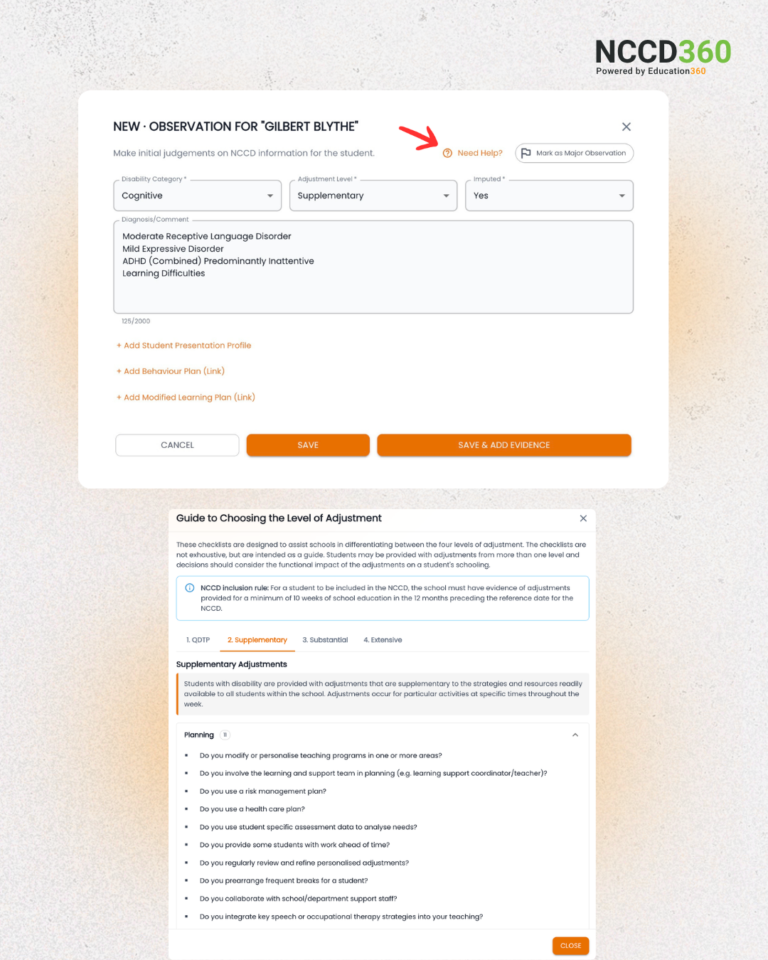
Determining the right Level of Adjustment for students is now easier with our new Need Help feature. Accessible from the Observation screen, staff can instantly access a guided checklist outlining the differentiation and support requirements across all four Levels of Adjustment.
The feature is designed to improve consistency, clarity and confidence when making NCCD adjustments.
2. Student Presentation Profile
We’ve introduced Student Presentation Profile within Observation, now automatically included in the IEP (Individual Education Plan) Template.
This feature provides a holistic and up-to-date view of each student, including strengths, challenges, academic progress and their social, emotional and functional capabilities.
By bringing all key information together in one place, schools can more easily link student needs to functional impacts, supporting informed decisions-making, targeted planning and evidence-based adjustments.
3. Functional Impact Categories
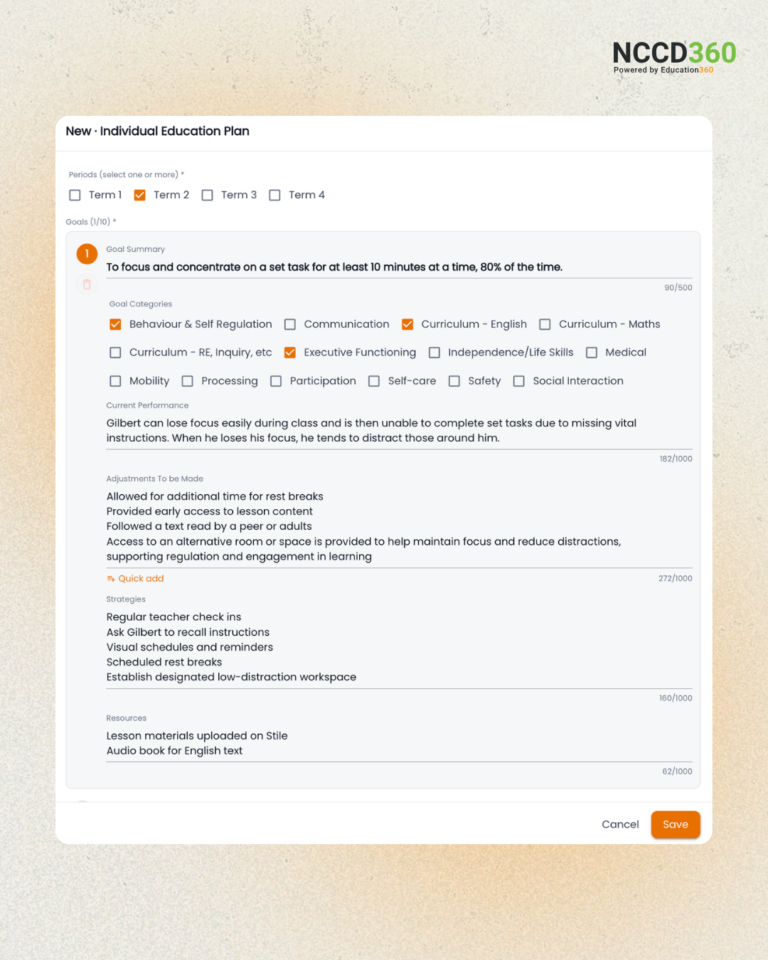
To further improve workflow and visibility, we’ve introduced Functional Impact Categories within the IEP.
This enhancement allows staff to directly link Functional Impact areas to IEP goals and adjustments within a single structured template, reducing the need to switch between multiple systems.
The IEP now centralises student goals, current academic performance and targeted adjustments into one connected view, making documentation more consistent and collaboration across teams more efficient.
By aligning learning goals and strategies with key functional areas such as communication, participation, behaviour and curriculum access, staff can plan, monitor and review student progress with greater clarity and confidence.
4. Capturing Student Voice in Consultation and Collaboration
NCCD360 now enables staff to capture meaningful consultation conversations between teachers and students directly within the IEP process.
This feature allows student perspectives, reflections, and experiences to be accurately documented and linked to specific IEP goals and adjustments, strengthening the connection between planning, support strategies, and functional skills development.
By incorporating student voice more seamlessly into documentation workflows, schools can support a more collaborative and student-centred planning approach.
Empowering schools with smarter documentation, clearer visibility, and more connected student support.
With these latest enhancements in NCCD360, schools can now benefit from a more unified and connected documentation process. Together, they are intentionally introduced to enhance visibility and support more efficient collaboration across teams.

 By Yasmin Hoang
 By Jessica Wijaya
 By barbara luyza