The Cost of Fragmented Systems
Across Australia, schools rely on an average of 10 to 16 separate software applications to manage their daily operations. Despite the intention behind each system, most were never designed to integrate with one another. This creates a landscape where data is scattered, duplicated and inconsistently updated. Staff often spend significant time searching for information, reconciling spreadsheets or manually transferring data between platforms. Studies show that up to 40% of administrative time in schools is consumed by manual data handling, while nearly 70% of data errors stem from duplicated entry. This fragmentation slows responses, complicates compliance and prevents schools from forming a clear picture of student needs, operational trends or emerging risks.
Integration Isn’t About IT, It’s About Insight
When systems connect, the value extends far beyond technology. Integration allows schools to move from isolated data points to holistic understanding. Instead of separate views from Finance, Enrolments, HR, Learning and Governance, leaders gain clarity across the entire student lifecycle. With connected systems, schools can finally answer questions that matter, such as how enrolment trends will affect revenue and staffing, how wellbeing patterns relate to learning outcomes, or where future resource allocation should be directed. Integration transforms raw information into meaningful insight, enabling leadership to make confident, evidence-based decisions grounded in real-time data rather than outdated reports or manual guesswork.
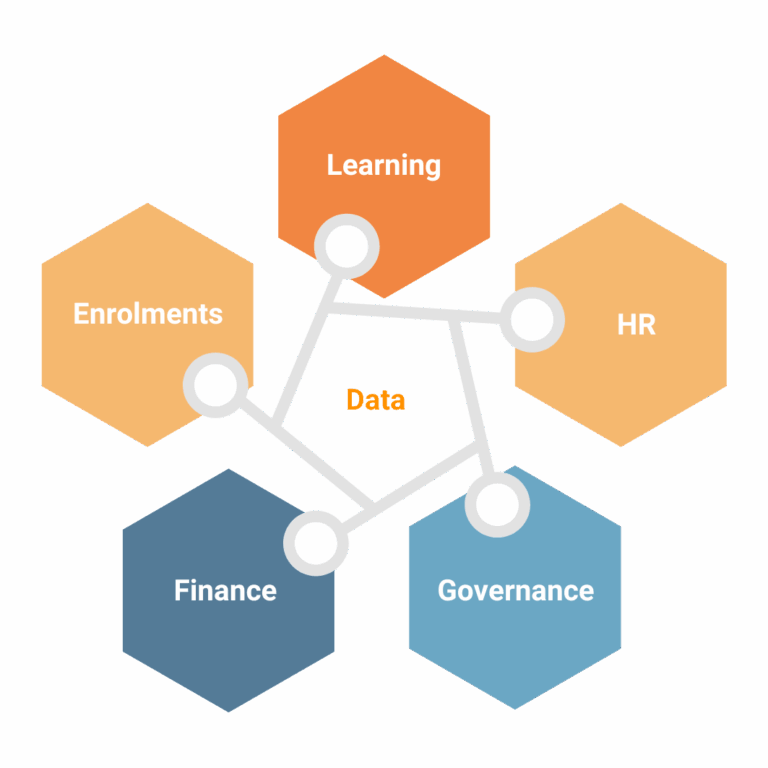
The shift occurring in forward-thinking schools is not about adding more tools, but about creating connected ecosystems. A connected school uses real-time data flows that move seamlessly from Finance to Enrolments, HR, Learning and Governance. This approach significantly reduces administrative burden, accelerates access to insights, and strengthens accuracy across forecasting, audit preparation and strategic planning. Schools that adopt connected data models are seeing reductions of 25 to 40% in administrative workload, improvements of more than 20% in forecasting accuracy and faster identification of student needs through unified learning and wellbeing information. This is not an IT upgrade, it’s a shift in how schools operate and plan for the future.
The complexity facing schools today continues to increase. Enrolment volatility, rising wellbeing needs, staffing shortages and heightened compliance expectations all place pressure on leadership and staff. Fragmented systems magnify these challenges, making it harder to respond quickly or make informed decisions. A connected data environment, however, gives schools the clarity to navigate uncertainty with confidence. By seeing the whole picture, 0students, finances, staff, community and outcomes, schools are better positioned to allocate resources, support learners and plan strategically. The schools that thrive in the next decade will not be those with the most software, but those with the most connected insights.

 By Nandita Saravanan

 By Jessica Wijaya